
Water path and exposure
Rain direction, intensity, ponding, runoff, pressure, interior timing, uphill details, and adjacent walls help narrow the source.
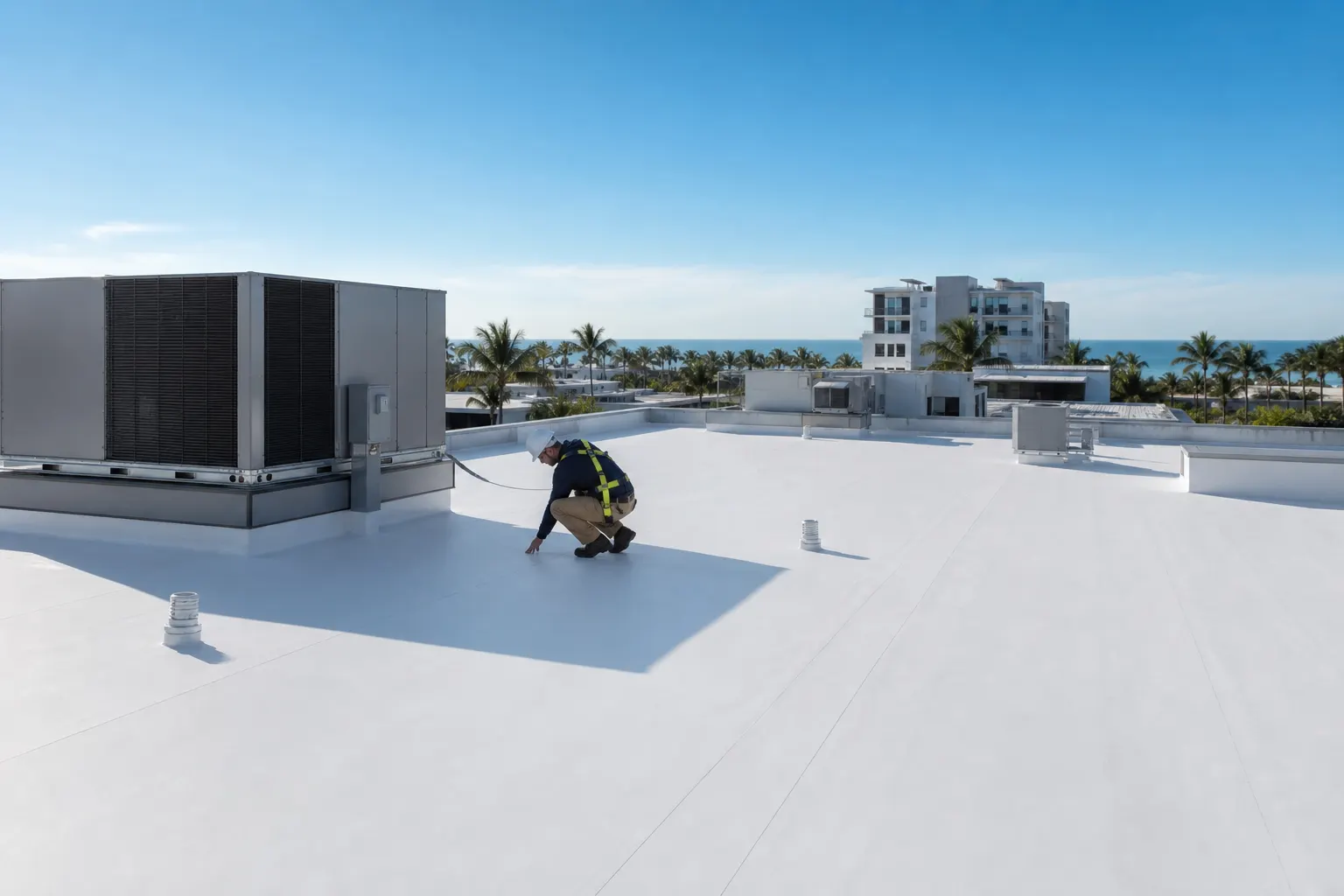
Waterproofing problems often occur where systems meet: roof to wall, curb to membrane, deck to drain, coating to penetration, or one material to another. The solution begins by defining the water path and substrate condition.
Tell us what’s going on and we’ll follow up with clear next steps.
Roof waterproofing should mean defined work at roof and roof-adjacent building-envelope conditions—not generic surface sealing. Water needs a source, an opening or discontinuity, and a force such as gravity, wind pressure, capillary action, or surface tension. The visible interior symptom may sit below, beside, or downhill from the failed detail.
Common problem areas include roof-to-wall transitions, parapets, copings, curbs, penetrations, drains, joints, cracks, material changes, low-slope tie-ins, and previous repairs. These locations combine movement, different substrates, fasteners, slopes, terminations, and water flow.
A coating may be one component of a restoration or waterproofing system, but it does not automatically correct wet substrate, unstable materials, active movement, failed flashings, incompatible surfaces, or poor drainage. Preparation, primer, reinforcement, thickness, termination, cure conditions, and manufacturer limits control the detail.
The actual path, substrate, movement, compatibility, drainage, and weather window guide material selection.
Rain direction, intensity, ponding, runoff, pressure, interior timing, uphill details, and adjacent walls help narrow the source.
The surface must have the required strength, stability, dryness, cleanliness, and preparation before it can accept a compatible system.
Cracks, joints, dissimilar materials, thermal movement, sealants, membranes, metals, and coatings require compatible transitions and reinforcement.
Water must be directed away from details, and temperature, humidity, rain, dew, thickness, and cure time must meet product requirements.
The appropriate material and preparation depend on movement, exposure, substrate, drainage, and the existing assembly.
Cleaning, drying, repairs, adhesion, reinforcement, thickness, and termination details matter as much as the waterproofing product.
The goal is to restore continuity at the failed detail rather than cover an unidentified condition.
We document interior symptoms, weather, wind direction, drainage, recent work, prior repairs, and accessible roof or wall conditions.
The review follows roofs, walls, parapets, curbs, penetrations, drains, joints, terminations, material changes, and water paths.
Active defects are corrected, substrate is prepared, and primer, reinforcement, membrane or coating, thickness, and terminations follow requirements.
Weather and access are controlled through cure; completed details, limitations, testing where specified, maintenance, and follow-up are recorded.
A reliable scope identifies the substrate, transitions, drainage, preparation, materials, terminations, and conditions that remain outside the work.
These answers provide a practical starting point. The building, roof assembly, permit jurisdiction, and observed conditions determine the final recommendation.
A coating may be part of a waterproofing or restoration system, but suitability depends on the existing roof, moisture, adhesion, preparation, details, drainage, and the coating’s approved use.
It can when the actual entry path and failed detail are correctly identified and the substrate can receive a compatible repair. Surface application over an unknown defect is less reliable.
Transitions combine different materials, movement, slopes, fasteners, terminations, and water flow. They require compatible detailing that maintains continuity across the change.
Use a city guide for local roof systems, weather exposure, permitting contacts, neighborhoods, and nearby communities—or explore every location we serve.
View all roofing locationsRoof replacements, repairs, storm response, and the communication that ties every project together.
1 / 22
We’ll take a look, explain what we find, and give you clear options built around your property and budget.