
Condition and maintenance review
Documents the accessible roof, drainage, details, prior repairs, current defects, housekeeping needs, and priorities for routine oversight.
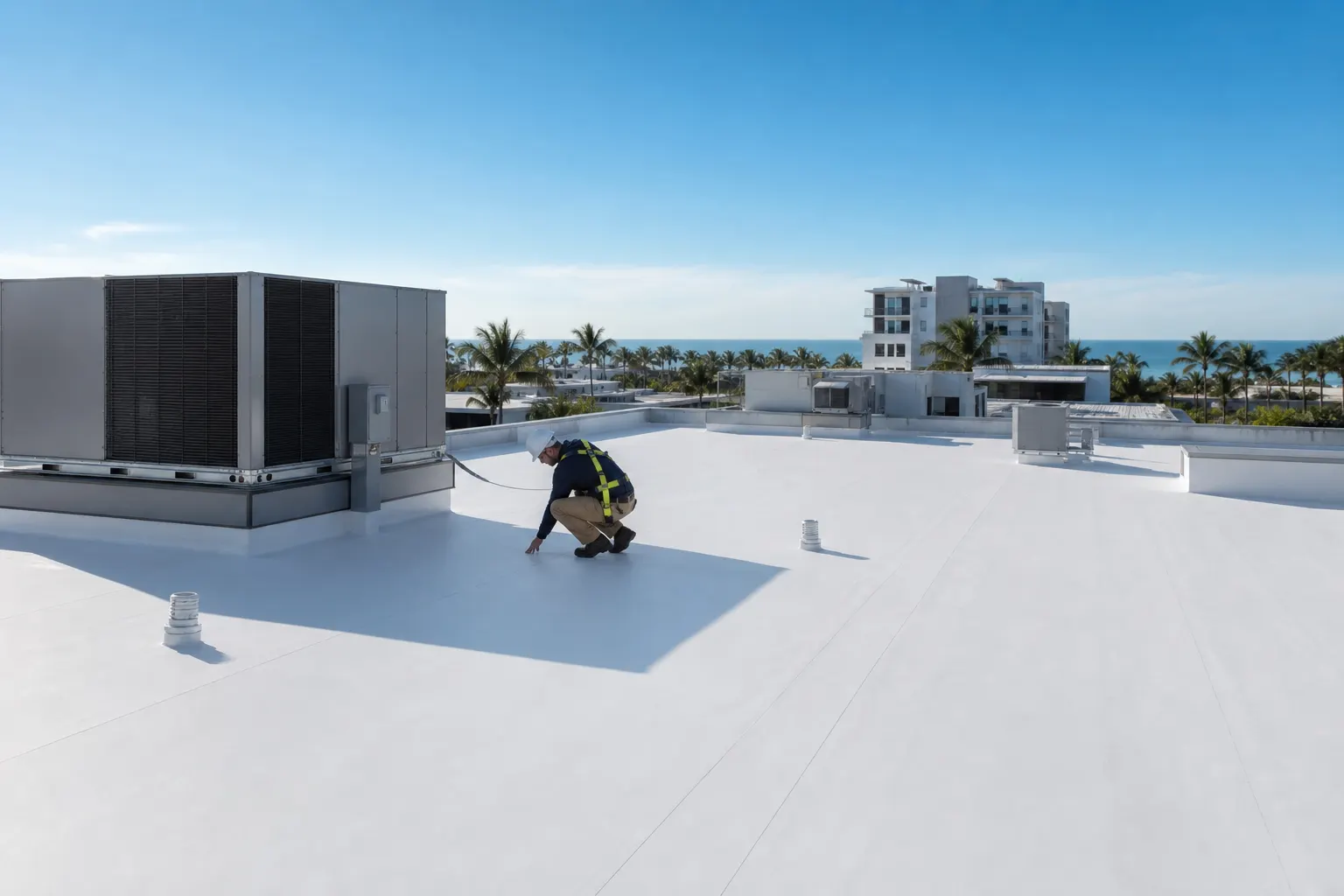
An inspection should do more than produce rooftop photographs. It should identify observed conditions, distinguish urgent defects from monitor items, and connect the findings to repair, maintenance, or replacement planning.
Tell us what’s going on and we’ll follow up with clear next steps.
Commercial roof inspections can answer different questions. A general condition review supports maintenance and capital planning; a leak investigation focuses on a reported water-entry path; a post-storm or post-trade review looks for new damage; and a pre-purchase assessment helps identify observed roofing risks before an ownership decision.
The baseline is a systematic visual and manual review of accessible roof areas, including the field, seams, flashings, walls, curbs, penetrations, perimeters, coping, drains, scuppers, overflow paths, traffic areas, equipment interfaces, and previous repairs. Interior observations can be included when access is available and relevant.
Infrared, electronic moisture methods, drones, core cuts, and destructive openings are separate tools—not automatic features of every inspection. Weather, ballast, coatings, access, overburden, and concealed construction can limit what any visual review can establish. The report should state those limits clearly.
The purpose of the inspection controls the depth, access, methods, report, and recommended follow-up.
Documents the accessible roof, drainage, details, prior repairs, current defects, housekeeping needs, and priorities for routine oversight.
Correlates interior evidence and weather history with likely roof entry paths and recommends a targeted repair or further authorized testing.
Looks for changes after severe weather, HVAC service, solar or electrical work, new penetrations, heavy traffic, or other rooftop activity.
Summarizes observed system, condition, risks, repair needs, limitations, and planning considerations without guaranteeing a remaining service life.
Scope is adapted to the property, roof access, system type, and reason for the assessment.
Findings are grouped by urgency and linked to recommended next steps.
A report should identify where a condition is, why it matters, and what type of next step is appropriate.
We confirm the property, roof areas, reason for inspection, available records, interior access, urgency, and whether any specialized method is separately authorized.
Accessible roof components and relevant interior areas are reviewed with location-specific notes and photographs.
Findings are connected to immediate response, repair, maintenance, monitoring, additional testing, or replacement planning.
The owner receives the documented conditions, limitations, priorities, and links to the appropriate repair, maintenance, or capital scope.
“Roof inspection” is not a single standardized scope. Clarify the purpose, roof areas, methods, report, and excluded professional services.
These answers provide a practical starting point. The building, roof assembly, permit jurisdiction, and observed conditions determine the final recommendation.
No. A condition inspection reviews the broader roof, while a leak investigation is focused on a reported water-entry area. The scopes may overlap but answer different questions.
It can support a planning range, but actual performance depends on concealed conditions, installation quality, exposure, maintenance, repairs, drainage, and future weather.
Yes. HVAC, electrical, solar, and other rooftop work can affect membranes, flashings, penetrations, and traffic areas, making a post-work review useful.
Use a city guide for local roof systems, weather exposure, permitting contacts, neighborhoods, and nearby communities—or explore every location we serve.
View all roofing locationsRoof replacements, repairs, storm response, and the communication that ties every project together.
1 / 22
We’ll take a look, explain what we find, and give you clear options built around your property and budget.