
Location of the entry path
Interior staining, moisture patterns, roof slope, and nearby penetrations help narrow the search. The exterior defect may be uphill or sideways from the visible damage.
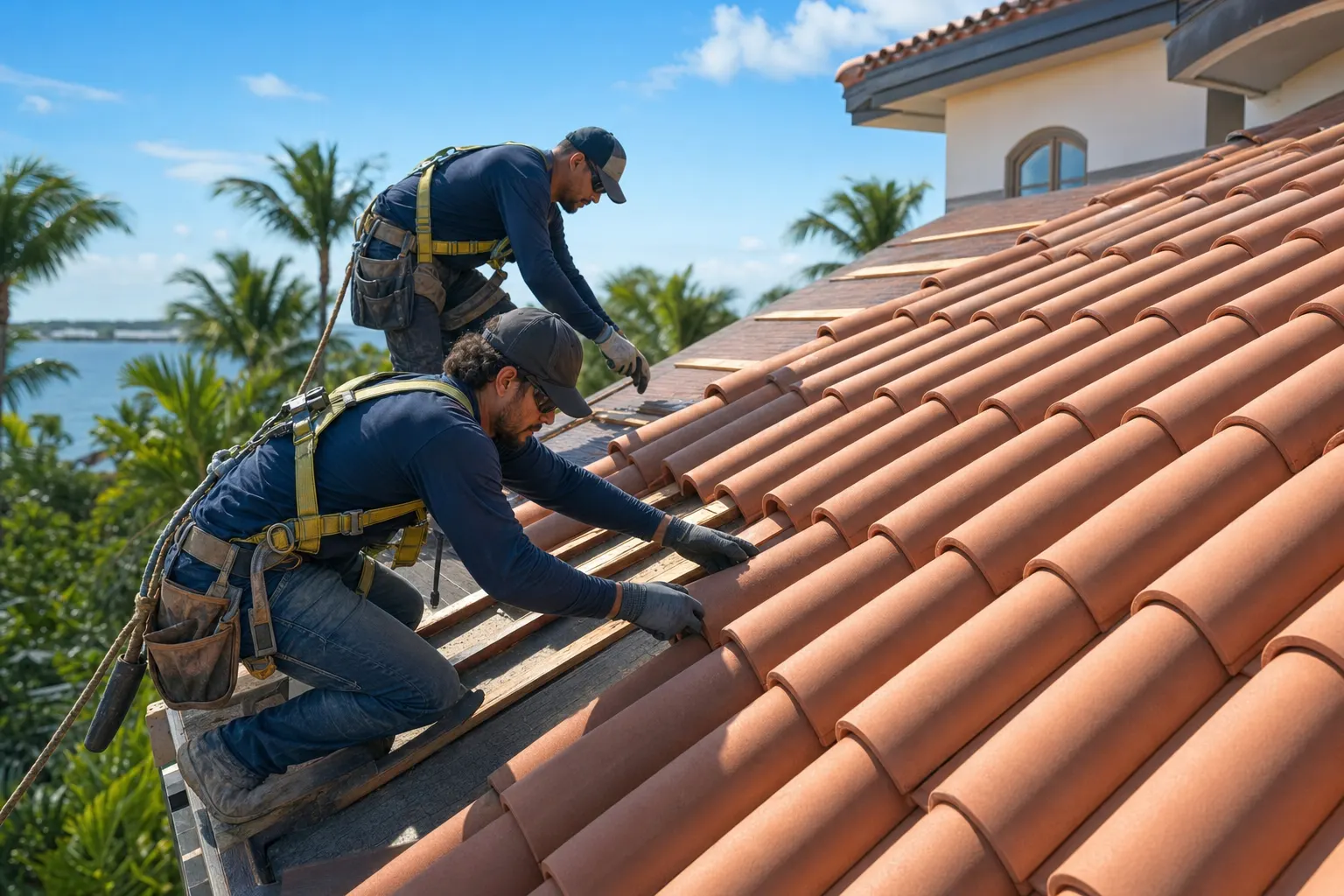
A stain inside the house rarely identifies the entry point by itself. Water can travel along decking, framing, fasteners, or underlayment before it becomes visible, so a useful repair begins with diagnosis rather than surface patching.
Tell us what’s going on and we’ll follow up with clear next steps.
Florida roof leaks are often intermittent. Wind direction, rainfall intensity, roof temperature, and the time it takes water to travel along decking or framing can make a leak appear far from the entry point. Common sources include wall and chimney flashings, valleys, vents, skylights, fasteners, cracked tile, lifted shingles, metal transitions, low-slope seams, and previous patch work.
A repair is most practical when the defect can be isolated, the surrounding materials remain serviceable, and compatible products are available. A small visible opening does not always mean a small scope: wet or deteriorated substrate, brittle materials, repeated failures, or an exhausted underlayment can make a narrow patch unreliable.
After storm damage, document conditions before temporary or permanent work changes the evidence. Homeowners should contact their insurer directly for coverage questions and follow the policy notice requirements. A roofer can document observed roof conditions and provide a repair scope, but does not decide whether a loss is covered.
The repair decision depends on the failed detail and the roof around it.
Interior staining, moisture patterns, roof slope, and nearby penetrations help narrow the search. The exterior defect may be uphill or sideways from the visible damage.
Brittle shingles, fragile tile, corroded metal, soft decking, or aged membrane can expand the safe work area and affect how well a repair ties in.
The repair material must suit the existing system. Discontinued tile profiles, unknown coatings, contaminated membranes, and mixed metals may limit reliable options.
Repeated work in the same area can signal an unresolved transition, drainage problem, or concealed moisture that deserves a broader investigation.
Repair scopes are built around the failed detail and the condition of adjacent materials.
A localized repair is most defensible when compatible materials remain available, the surrounding system is serviceable, and the defect can be corrected without chasing widespread failure.
The goal is to identify a defensible repair area, correct the related detail, and explain what should be watched afterward.
We start with when and where the leak appears, recent storms or trade work, interior evidence, and any known repair history.
We evaluate the field covering and the flashings, transitions, penetrations, drainage paths, edges, and prior repairs that can feed water toward the reported area.
The scope accounts for access, material fragility, tie-in requirements, substrate condition, and compatible replacement materials—not only the visible defect.
After completing the compatible repair, we document the work and identify maintenance items or broader conditions that may require future planning.
A useful repair proposal should connect the observed condition to a specific method and explain the limits of the work.
These answers provide a practical starting point. The building, roof assembly, permit jurisdiction, and observed conditions determine the final recommendation.
Often, yes. Localized defects can frequently be repaired when the surrounding roof remains serviceable and matching or compatible materials are available.
Water may enter uphill or sideways from the visible stain and travel along structural or roofing components. Flashings, penetrations, valleys, transitions, and low-slope drainage areas all need to be considered.
Individual tile may be replaceable, but the underlayment, attachment, surrounding tile condition, and availability of a compatible profile also determine the proper repair.
Use a city guide for local roof systems, weather exposure, permitting contacts, neighborhoods, and nearby communities—or explore every location we serve.
View all roofing locationsRoof replacements, repairs, storm response, and the communication that ties every project together.
1 / 22
We’ll take a look, explain what we find, and give you clear options built around your property and budget.