
Panel and seam type
Standing seam, exposed fastener, mechanically seamed, snap-lock, and specialty profiles suit different slopes, substrates, budgets, and maintenance expectations.
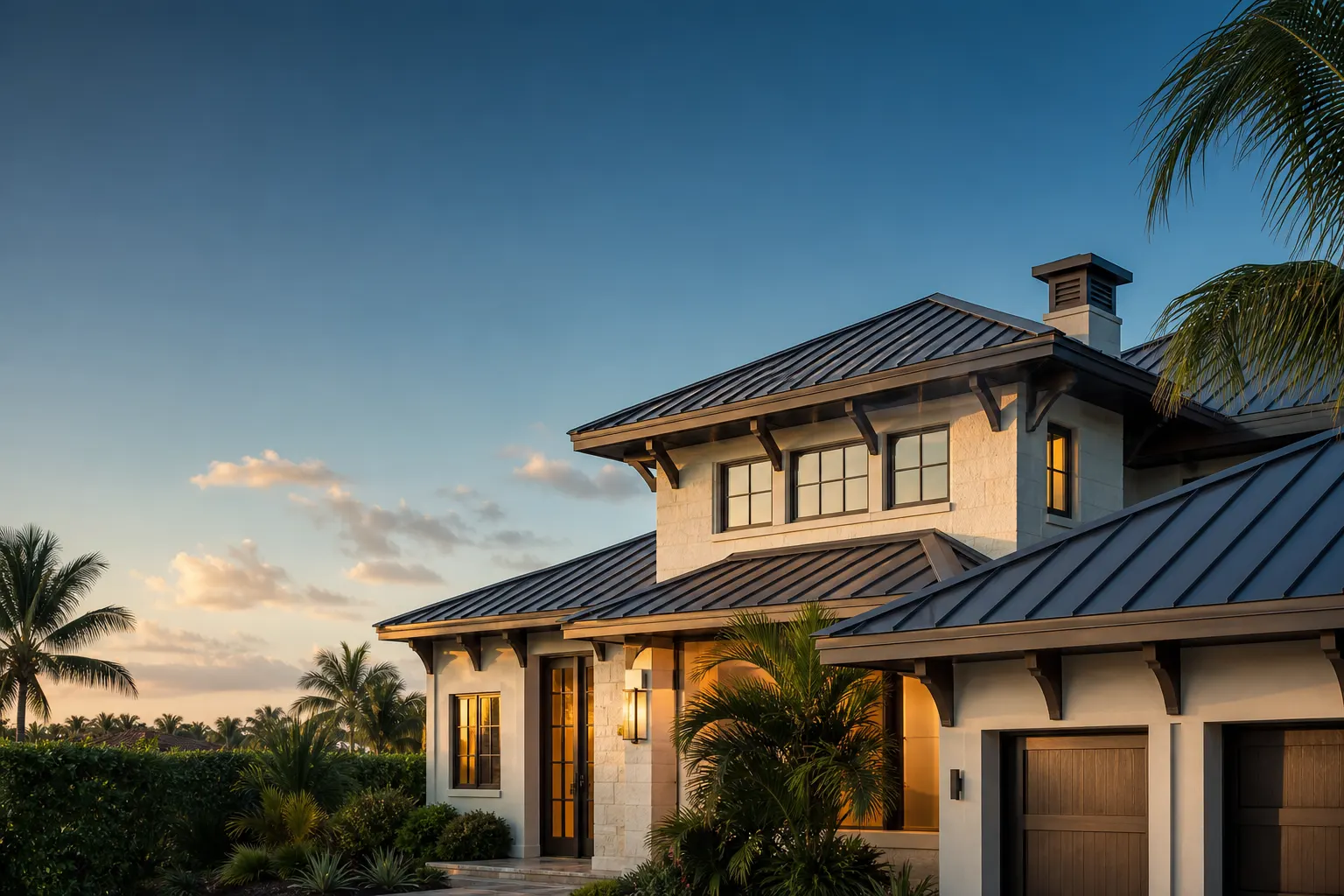
Metal roofing performance depends on panel profile, substrate, clips or fasteners, tested pressure ratings, edge and transition details, penetrations, finish, and installer execution.
Tell us what’s going on and we’ll follow up with clear next steps.
Standing-seam systems commonly conceal their primary clips or fasteners, while exposed-fastener panels use visible fasteners that require different detailing and maintenance. Panel profile, width, seam, span, substrate, slope, clips, fasteners, and allowable pressures make each an engineered assembly rather than a generic “metal roof.”
Southwest Florida coastal exposure adds selection questions about base metal, coating, fasteners, cut edges, sealants, runoff from other metals, condensate, and manufacturer distance limitations. Dissimilar metals and unsuitable fasteners can create corrosion even when the panel finish appears sound.
Thermal movement must be accommodated at seams, clips, penetrations, curbs, eaves, ridges, walls, and long panel runs. Future solar, HVAC, plumbing, or electrical work should be considered before choosing where and how the roof will be penetrated.
The panel style is one decision within a site-specific wind, water, movement, and corrosion strategy.
Standing seam, exposed fastener, mechanically seamed, snap-lock, and specialty profiles suit different slopes, substrates, budgets, and maintenance expectations.
Building height, exposure, roof zones, panel width, span, clip or fastener spacing, deck, and approval limits work together.
Base metal, finish, fasteners, cut edges, dissimilar materials, salt deposition, cleaning, and warranty exclusions should match the site.
Long panels expand and contract. Seams, flashings, curbs, pipes, skylights, and future equipment must preserve controlled movement and drainage.
Standing-seam and exposed-fastener systems behave differently and suit different building types, slopes, budgets, and maintenance expectations.
Large panels can expose broad roof areas if attachment or edge details fail, so approved assemblies and correct perimeter work matter.
The process establishes geometry, substrate, pressures, details, and exposure before finalizing the panel package.
Slopes, panel runs, valleys, walls, hips, ridges, eaves, rakes, penetrations, and mixed-roof tie-ins are documented.
Deck, underlayment, ventilation, pressures, roof zones, attachment, coastal exposure, and product documentation are reviewed.
Panel, seam, clips or fasteners, finish, trims, flashings, sealants, closures, and future rooftop plans are coordinated.
Panels and details follow the approved sequence; edges, seams, penetrations, scratches, swarf, and maintenance requirements are checked at closeout.
Panel marketing is not a substitute for the attachment, pressure, detail, and coastal-exposure information that controls the assembly.
Each project page has photos, a location link, and room for a full job description.
These answers provide a practical starting point. The building, roof assembly, permit jurisdiction, and observed conditions determine the final recommendation.
Metal does not make a building more likely to be struck. Lightning risk is influenced by location, height, surroundings, and storm activity; metal is also noncombustible.
Standing-seam systems use panels joined at raised seams, commonly with concealed clips or fasteners that allow the panel system to manage attachment and movement.
It can, but exposure, substrate, panel metal, finish, fasteners, cut edges, maintenance, and manufacturer limitations should be considered for the specific site.
Use a city guide for local roof systems, weather exposure, permitting contacts, neighborhoods, and nearby communities—or explore every location we serve.
View all roofing locationsRoof replacements, repairs, storm response, and the communication that ties every project together.
1 / 22
We’ll take a look, explain what we find, and give you clear options built around your property and budget.