
Drainage and housekeeping
Drains, scuppers, strainers, gutters, debris, vegetation, and ponding indicators are reviewed because slow or blocked drainage stresses other details.
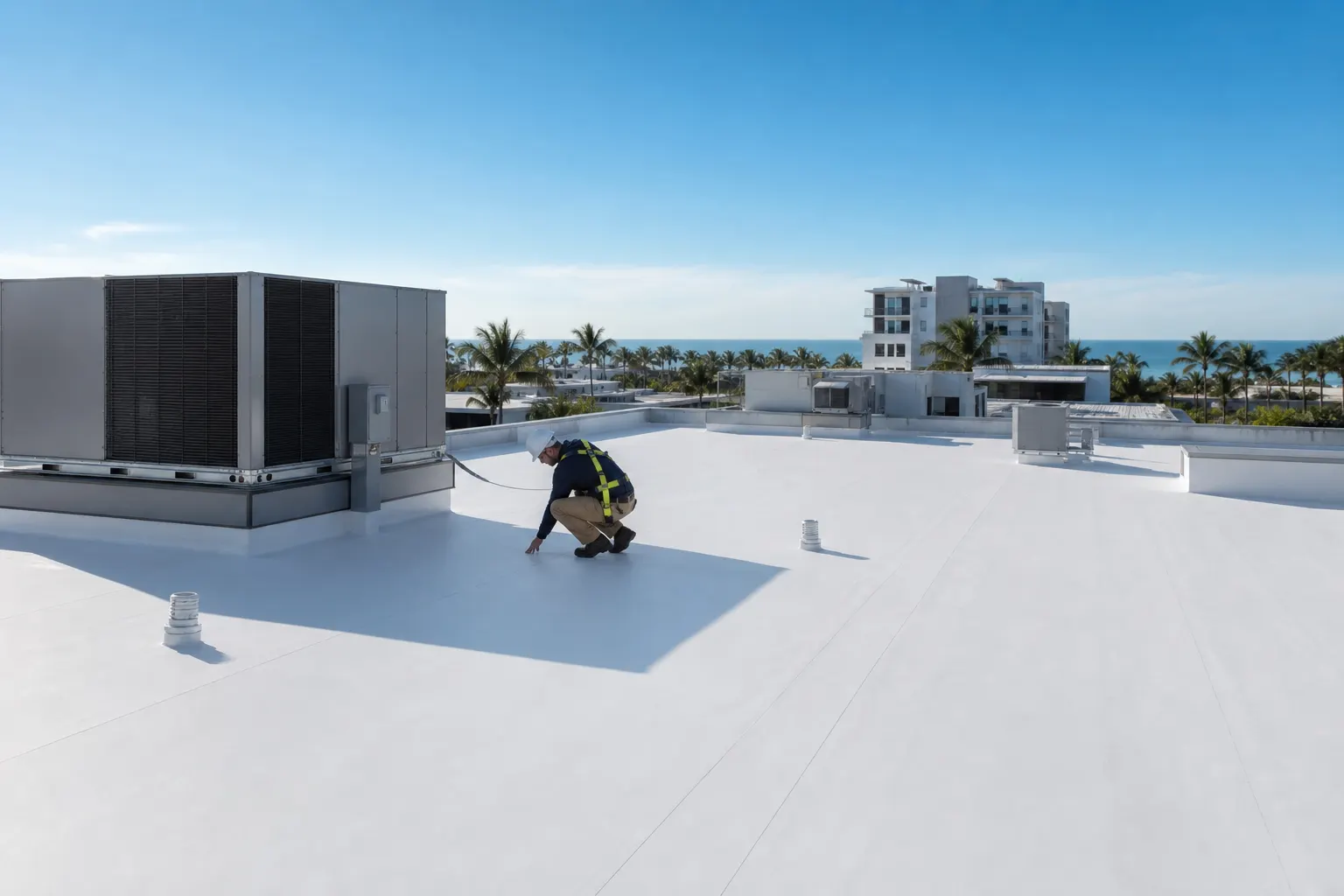
Maintenance is most valuable when it creates a repeatable record. Owners and managers should be able to see how drains, flashings, seams, penetrations, prior repairs, and traffic areas change over time.
Tell us what’s going on and we’ll follow up with clear next steps.
A commercial roof changes over time as storms pass, materials move, drains collect debris, service technicians cross the surface, and new equipment or penetrations are added. Scheduled review can identify open details, drainage restrictions, traffic damage, and small defects before they affect a wider area.
A useful program uses the same roof identification, photo locations, condition categories, and priority language on every visit. That creates a history the owner can compare, supports warranty and vendor records, and helps separate routine housekeeping from authorized repairs and future replacement planning.
Inspection frequency should follow the roof condition, traffic, exposure, warranty, and manufacturer requirements. NRCA guidance supports review at least twice a year and after severe weather, but the property-specific program and warranty may call for a different cadence.
The scope should define what is observed, what minor work is included, and what requires separate approval.
Drains, scuppers, strainers, gutters, debris, vegetation, and ponding indicators are reviewed because slow or blocked drainage stresses other details.
The field, seams, walls, curbs, penetrations, terminations, coping, edge metal, coatings, and prior repairs are checked for change.
Walk pads, HVAC service areas, condensate, supports, dropped tools, new fasteners, and unreported trade work are common sources of damage.
Findings should distinguish active or urgent conditions, near-term repairs, routine maintenance, monitoring, and replacement-planning observations.
The program should distinguish routine housekeeping and minor corrections from repairs that require a separate scope.
Consistent reporting helps compare conditions across roofs and plan spending before emergencies make the decisions.
Each visit adds current information to the roof history and makes the next action easier to approve.
We review the roof identifier, prior report, leaks, severe weather, new rooftop work, access changes, and warranty considerations.
The roof field, details, drainage, traffic areas, equipment interfaces, and previous repairs are reviewed using consistent location references.
Defined housekeeping or minor corrections are completed only within the agreed program; larger repairs, testing, or replacement remain separate scopes.
Dated photos and findings show what changed, what was completed, what requires approval, and when the next review is recommended.
“Maintenance” can mean very different things. The agreement should name the checklist, included work, report, and exclusions.
These answers provide a practical starting point. The building, roof assembly, permit jurisdiction, and observed conditions determine the final recommendation.
Frequency depends on the roof, warranty, exposure, traffic, and property risk. Many owners schedule recurring inspections and additional reviews after severe weather or rooftop work.
Typical visits review drainage, debris, seams, flashings, penetrations, rooftop equipment interfaces, traffic areas, and previous repairs, followed by documentation and prioritized recommendations.
Maintenance cannot reverse an exhausted system, but timely corrections can prevent small defects from becoming larger moisture and substrate problems and can improve planning for eventual replacement.
Use a city guide for local roof systems, weather exposure, permitting contacts, neighborhoods, and nearby communities—or explore every location we serve.
View all roofing locationsRoof replacements, repairs, storm response, and the communication that ties every project together.
1 / 22
We’ll take a look, explain what we find, and give you clear options built around your property and budget.