
Slope and drainage
Steep-slope coverings shed water; low-slope membranes provide continuous waterproofing. Dead valleys and mixed-slope tie-ins require special coordination.
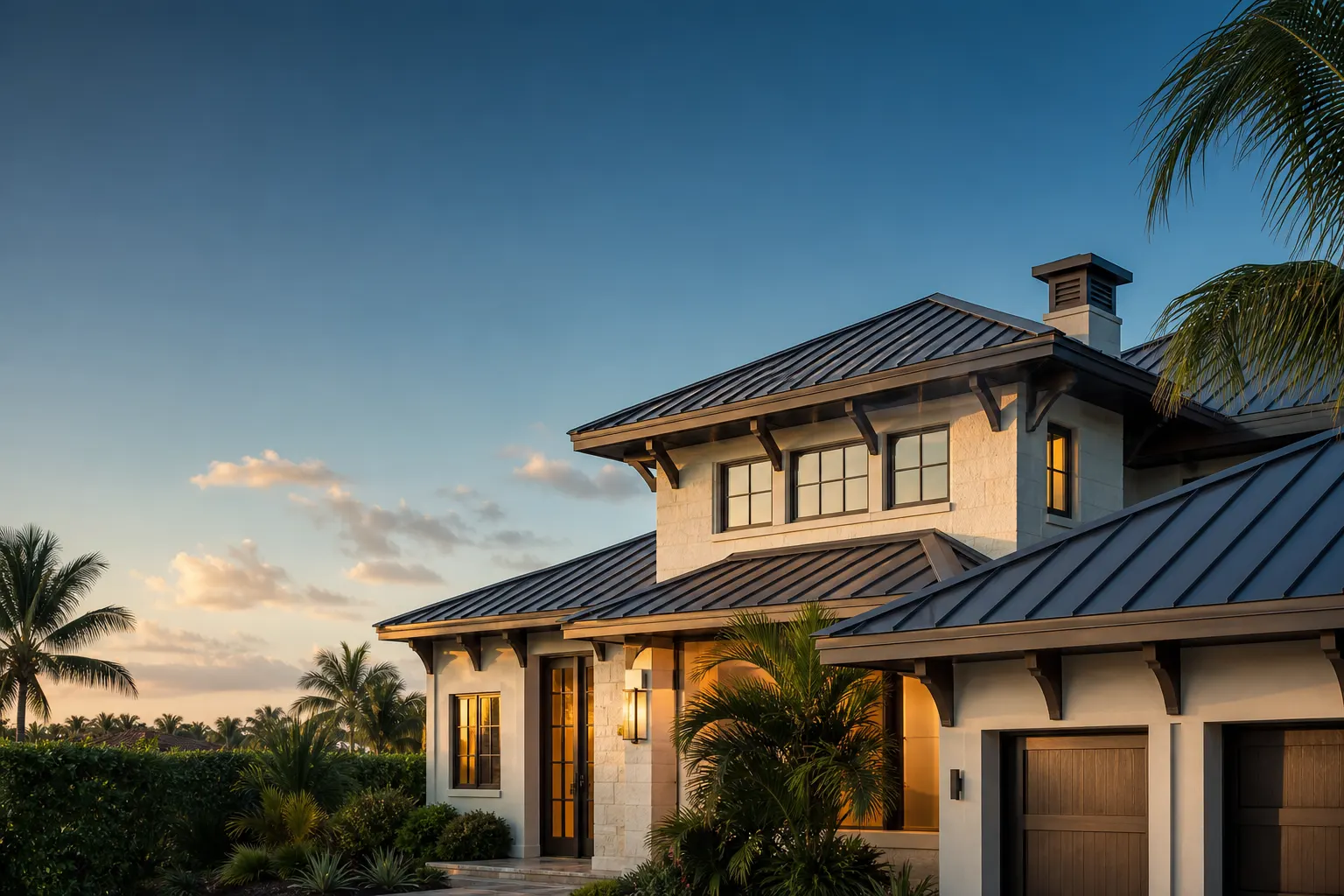
There is no universally best roof material. The right system depends on slope, structure, drainage, exposure, architecture, use, approved assemblies, maintenance expectations, and lifecycle priorities.
Tell us what’s going on and we’ll follow up with clear next steps.
Start with the specific need below, or use this page as the complete planning guide.
Tile, metal, and asphalt shingles are water-shedding coverings commonly used on steeper slopes. TPO, modified bitumen, and other continuous membranes serve low-slope areas where water moves more slowly. Many Florida properties combine both conditions, making the transition between systems as important as either surface.
Selection begins with slope, geometry, structure, deck, drainage, exposure, occupancy, community standards, maintenance tolerance, and budget. Tile weight, metal movement, shingle repairability, membrane traffic, rooftop equipment, and coastal finish limitations can change the best fit.
Wind performance belongs to the complete permitted assembly: deck and attachment, underlayment or insulation, fasteners or adhesive, covering or membrane, flashings, perimeters, penetrations, and installation within product limitations. A material name or headline wind rating does not describe that complete system.
Compare building fit and assembly details before comparing colors, warranties, or generalized lifespans.
Steep-slope coverings shed water; low-slope membranes provide continuous waterproofing. Dead valleys and mixed-slope tie-ins require special coordination.
Weight, deck condition, attachment, insulation, moisture, and pullout resistance influence which assemblies can be permitted and installed.
Site pressures, roof zones, height, perimeters, salt exposure, compatible fasteners, finishes, and manufacturer limits all matter.
Budget, appearance, repair access, traffic, inspections, future solar or HVAC work, and maintenance capacity shape lifecycle value.
Tile, metal, and asphalt shingles each bring different weight, profile, attachment, repair, appearance, and budget considerations.
Commercial and low-slope roofs rely on continuous waterproofing assemblies and carefully detailed drainage, seams, edges, and penetrations.
We narrow options using the property and project conditions rather than declaring one material universally best.
The evaluation identifies steep and low-slope areas, transitions, drainage, deck, penetrations, equipment, and known repairs.
Weight, substrate, wind design, coastal conditions, geometry, community rules, access, and building use remove unsuitable options.
Covering or membrane, water-shedding layers, insulation, attachment, flashings, edges, ventilation, drainage, and maintenance are reviewed together.
Product documents, installation limits, inspections, warranty steps, repair expectations, and maintenance requirements complete the decision.
A fair comparison separates material marketing from the complete assembly, installation, and ownership plan.
These answers provide a practical starting point. The building, roof assembly, permit jurisdiction, and observed conditions determine the final recommendation.
Service life depends on the complete assembly, installation, exposure, maintenance, repairs, drainage, and product—not the material category alone.
No. Roof slope, structure, product approvals, attachment design, geometry, community requirements, and budget must support the selected system.
They drain more slowly and rely on continuous waterproofing membranes, sealed seams, flashings, drains, scuppers, and edge details rather than overlapping water-shedding units alone.
Use a city guide for local roof systems, weather exposure, permitting contacts, neighborhoods, and nearby communities—or explore every location we serve.
View all roofing locationsRoof replacements, repairs, storm response, and the communication that ties every project together.
1 / 22
We’ll take a look, explain what we find, and give you clear options built around your property and budget.