
Drainage and ponding
Slope, drains, scuppers, overflow, debris, deflection, equipment, and recurring water patterns should be mapped before selecting corrective work.
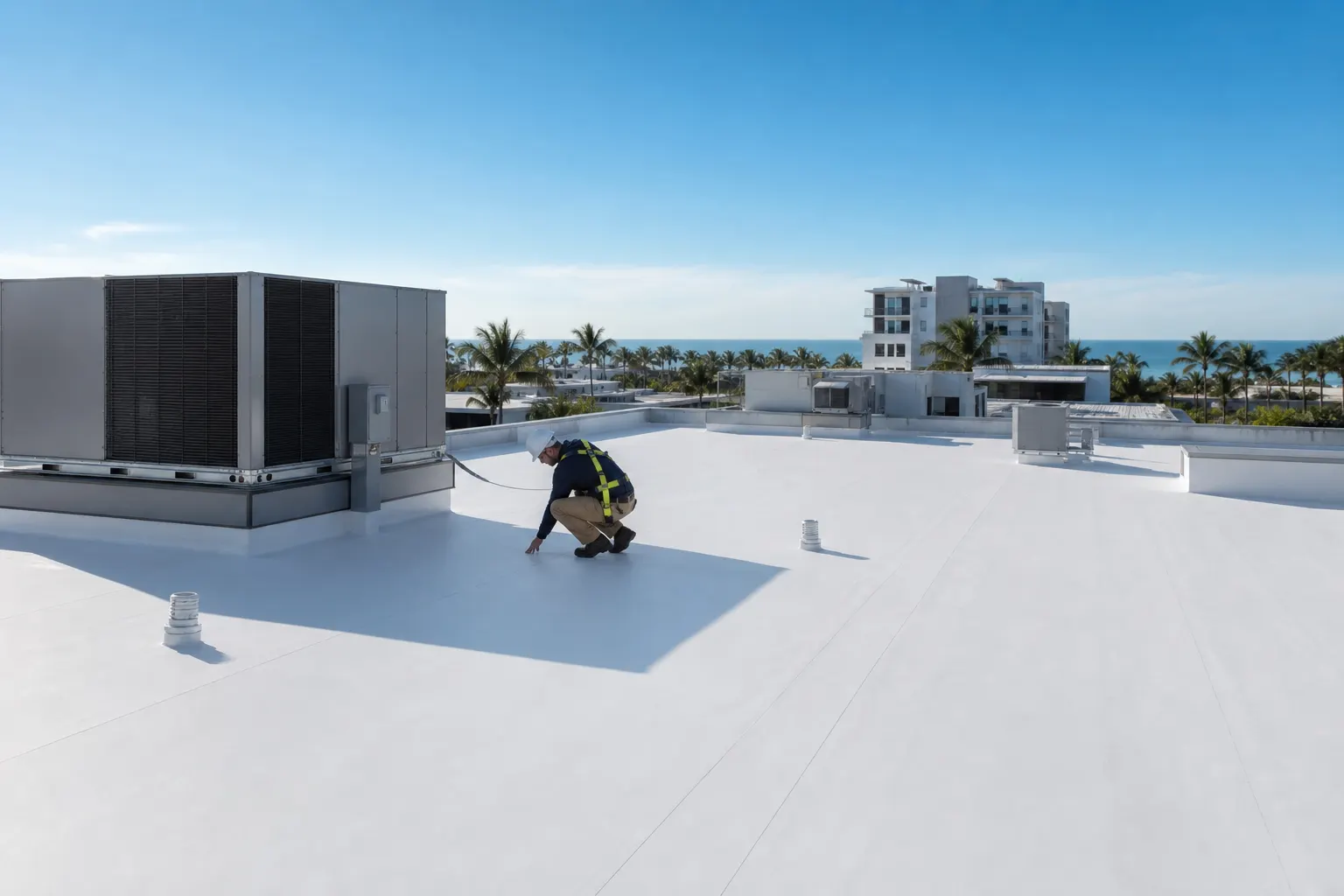
“Flat” roofs still need positive drainage. Because water moves slowly, seams, flashings, drains, scuppers, penetrations, edges, substrate, and insulation slope are central to performance.
Tell us what’s going on and we’ll follow up with clear next steps.
Low-slope roofs rely on continuous membranes because water moves more slowly than it does across steep-slope tile, metal, or shingles. Drains, scuppers, gutters, overflow routes, insulation slope, parapets, curbs, penetrations, edges, and transitions are central parts of the assembly.
TPO, modified bitumen, coatings where suitable, and other confirmed systems have different substrates, attachment, traffic tolerance, repair methods, and details. Coating is a restoration option only when moisture, membrane condition, adhesion, drainage, and preparation meet the selected system requirements.
Repair, restoration, recover, and tear-off decisions should consider wet insulation, deck condition, existing layers, attachment, fire and weight limits, code, manufacturer requirements, building use, and future rooftop work—not only the visible surface.
Drainage, concealed moisture, attachment, perimeters, and rooftop operations usually drive the decision.
Slope, drains, scuppers, overflow, debris, deflection, equipment, and recurring water patterns should be mapped before selecting corrective work.
Existing system, seams, repairs, coatings, insulation, substrate, adhesion, and possible wet areas influence repair or replacement limits.
Deck, attachment or adhesion, insulation, cover board, roof zones, perimeter metal, coping, and flashings create the uplift-resistance path.
Curbs, condensate, traffic, grease or chemicals, future penetrations, interior sensitivity, access, and work hours affect system choice and phasing.
The existing assembly, building use, attachment, drainage, traffic, and lifecycle plan guide system selection.
Most low-slope roof problems concentrate at transitions and areas where water or traffic stress the assembly.
The roof is mapped as connected areas and details before repair, restoration, recover, or replacement is selected.
We record drains, scuppers, ponding indicators, leaks, seams, flashings, edges, penetrations, equipment, traffic, and prior work.
Membrane condition, moisture indicators, insulation, deck, attachment, layers, coatings, and access limits guide further testing or scope.
Repair, qualified restoration, recover, or tear-off options are compared with code, product, drainage, warranty, and operations in mind.
The approved assembly is completed at seams, flashings, perimeters, drains, curbs, penetrations, and walk areas, then documented.
A surface-only price can miss the insulation, deck, attachment, and detail conditions that determine whether the scope is suitable.
These answers provide a practical starting point. The building, roof assembly, permit jurisdiction, and observed conditions determine the final recommendation.
Low-slope roofs should be designed to drain. Persistent ponding can increase stress, collect debris, complicate repairs, and indicate drainage or slope conditions that deserve review.
Sometimes. The existing membrane, moisture condition, adhesion, details, drainage, substrate, repairs, and coating manufacturer requirements determine whether restoration is suitable.
Curbs, penetrations, condensate, service traffic, fasteners, and repeated trade work create concentrated detailing and wear around rooftop equipment.
Use a city guide for local roof systems, weather exposure, permitting contacts, neighborhoods, and nearby communities—or explore every location we serve.
View all roofing locationsRoof replacements, repairs, storm response, and the communication that ties every project together.
1 / 22
We’ll take a look, explain what we find, and give you clear options built around your property and budget.