
Interior-to-roof correlation
Roof plans, deck direction, slope, insulation, rainfall direction, and the timing of leakage help compare the interior symptom with possible entry points.
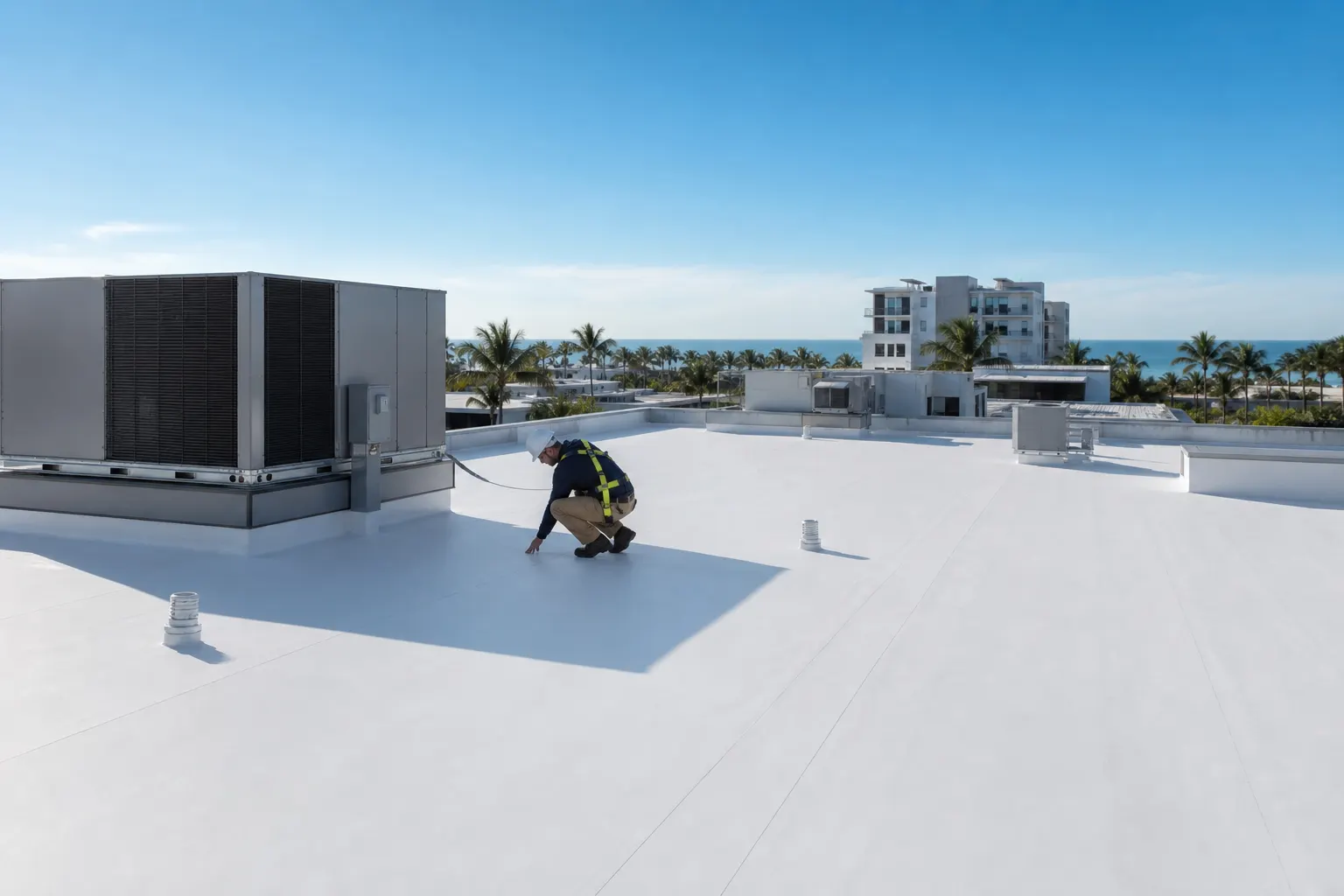
We investigate commercial roof leaks, identify failed details, document surrounding conditions, and complete compatible repairs for TPO, modified bitumen, metal, coatings, flashings, drainage areas, and other low-slope systems.
Tell us what’s going on and we’ll follow up with clear next steps.
Water entering a low-slope roof can move through insulation, deck flutes, structural framing, or previous repair layers before it reaches a ceiling tile or wall. The interior location and storm conditions are useful evidence, but the investigation also has to consider seams, flashings, curbs, penetrations, drains, scuppers, perimeters, coping, metal laps, and equipment interfaces.
The repair method must be compatible with the existing assembly. TPO commonly requires clean, properly prepared, heat-welded membrane work; modified bitumen, metal, and coated roofs each have different preparation and tie-in needs. Applying generic sealant over an unknown substrate is not a substitute for diagnosing the failed detail.
Temporary stabilization and permanent repair are separate decisions. During unsafe weather, rooftop work may need to wait. Once conditions allow access, documentation should distinguish the immediate protection from the compatible permanent scope and any wider moisture or substrate concerns.
A local defect may be repairable, but the surrounding roof and concealed materials establish the limits.
Roof plans, deck direction, slope, insulation, rainfall direction, and the timing of leakage help compare the interior symptom with possible entry points.
Membrane type, age, contamination, coatings, surface preparation, primers, weldability, fasteners, and metal compatibility affect the repair method.
Wet insulation, deteriorated deck, broad loss of adhesion, or multiple failed repairs can turn a narrow defect into a larger authorized scope.
Existing warranty terms may govern notice, contractor status, materials, and documentation. Permit requirements depend on the repair extent and jurisdiction.
The visible interior leak may be separated from the exterior entry point by insulation, deck flutes, slope, or structural framing.
Materials and methods should be compatible with the existing assembly and manufacturer requirements where warranties remain in effect.
The workflow is designed to reduce guesswork while keeping the owner informed about what a repair can and cannot resolve.
We record the building and interior location, when the leak appears, rain and wind conditions, prior repairs, equipment work, and access contacts.
The roof review compares the interior evidence with flashings, seams, transitions, penetrations, drainage, edges, traffic, and earlier work.
The proposal defines preparation, removal, substrate assumptions, repair materials, tie-ins, exclusions, and any separately recommended testing.
We document the repaired area, note unresolved or monitor conditions, and recommend follow-up or maintenance based on the surrounding roof.
Owners should be able to connect the suspected defect, repair material, work limits, and follow-up recommendation.
These answers provide a practical starting point. The building, roof assembly, permit jurisdiction, and observed conditions determine the final recommendation.
The process combines interior observations, rooftop inspection, moisture indicators where appropriate, and review of seams, flashings, drainage, penetrations, and prior repairs.
Not automatically. Repetition can indicate an unresolved detail, trapped moisture, widespread aging, poor drainage, or multiple unrelated defects. The broader condition determines the recommendation.
Warranty requirements vary. When a warranty applies, repair materials, notification, documentation, and authorized-contractor requirements should be checked before work begins.
Use a city guide for local roof systems, weather exposure, permitting contacts, neighborhoods, and nearby communities—or explore every location we serve.
View all roofing locationsRoof replacements, repairs, storm response, and the communication that ties every project together.
1 / 22
We’ll take a look, explain what we find, and give you clear options built around your property and budget.