
Deck, insulation, and cover board
Deck type, vapor conditions, thermal goals, drainage slope, compressive needs, traffic, and substrate protection shape the layers below TPO.
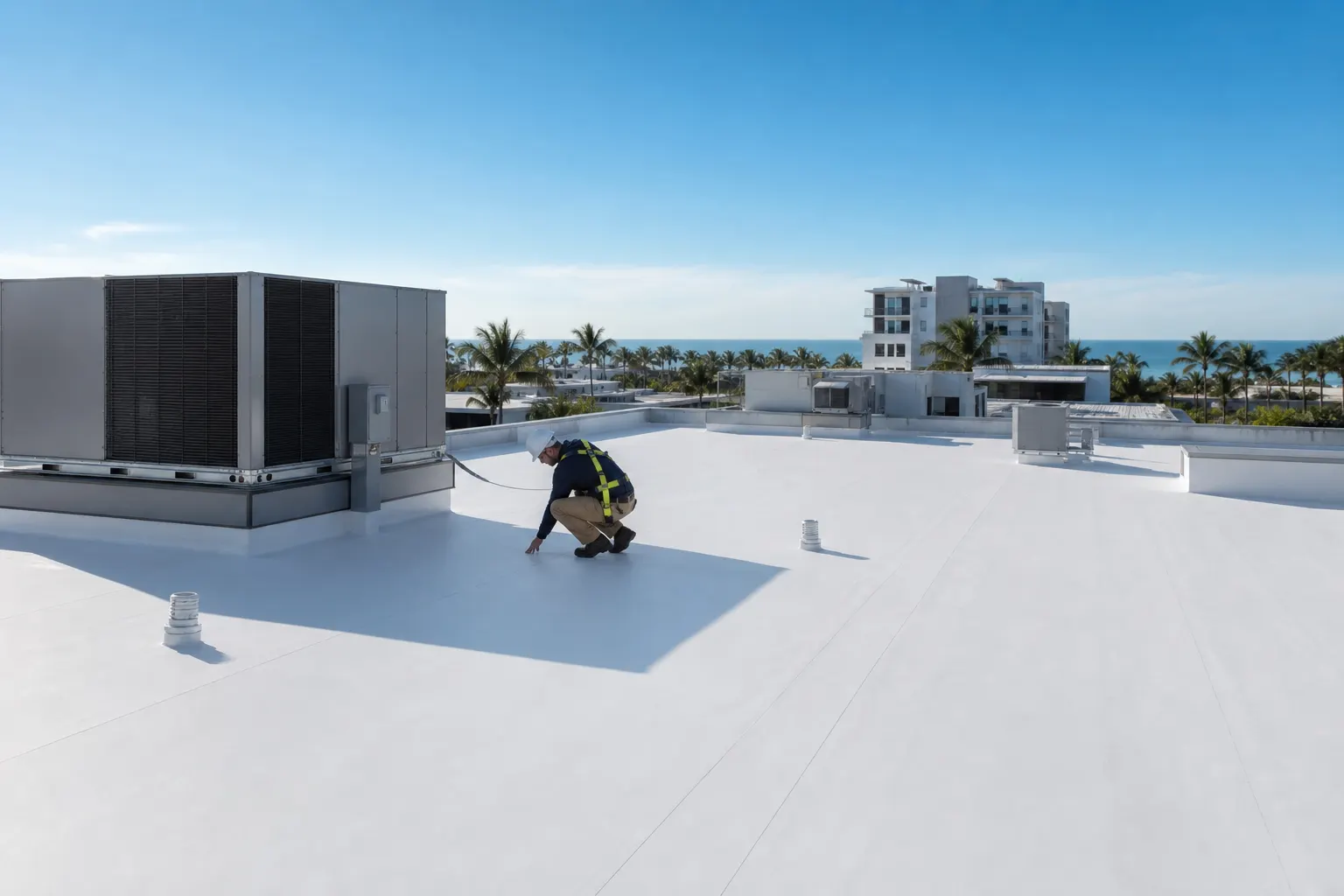
TPO is a single-ply thermoplastic membrane commonly used on low-slope roofs. The assembly may be mechanically attached or adhered, with heat-welded seams and system-specific flashings, edges, insulation, and accessories.
Tell us what’s going on and we’ll follow up with clear next steps.
TPO is a reinforced thermoplastic membrane used primarily on low-slope roofs. Sheets and compatible accessories are joined with controlled hot-air welding, but the roof also includes the deck, possible air or vapor-control layers, insulation, tapered insulation where used, cover board, attachment or adhesive, flashings, perimeters, drains, and walk paths.
Mechanically attached, adhered, and induction-welded approaches suit different decks, building uses, wind pressures, roof zones, and project constraints. Membrane thickness is one choice, not a complete quality ranking; reinforcement, formulation, substrate, attachment, detail design, installer execution, and warranty requirements all matter.
White TPO can reduce solar heat absorption compared with dark surfaces, but building energy results depend on insulation, HVAC, climate, roof condition, and the complete envelope. Reflectivity should be considered alongside drainage, traffic, grease or chemicals, equipment, and maintenance.
Design and service decisions extend from the deck through the membrane and every welded transition.
Deck type, vapor conditions, thermal goals, drainage slope, compressive needs, traffic, and substrate protection shape the layers below TPO.
Mechanical, adhered, or induction-welded attachment, fastener or adhesive patterns, perimeters, corners, and pressure limits must fit the building.
Seams, prefabricated accessories, walls, curbs, pipes, drains, edges, and tie-ins require clean preparation and quality-control procedures.
Traffic, equipment, condensate, grease, chemicals, debris, drainage, future penetrations, and access control affect design and maintenance.
Membrane thickness is only one choice within a larger roof design.
Compatible preparation and welding are important when addressing punctures, open details, flashings, and prior repairs.
The process establishes substrate, moisture, pressures, drainage, details, and operating conditions before membrane selection.
We review roof areas, deck, drainage, equipment, leaks, repairs, layers, access, product information, and warranty documents where available.
Seams, flashings, wet-insulation indicators, substrate, attachment, traffic, and prior work guide repair, testing, recover, or replacement decisions.
Insulation, taper, cover board, attachment, membrane, flashings, perimeters, drains, pressure zones, and manufacturer details are coordinated.
Seams and details receive the required quality checks; punch-list, closeout, traffic rules, repairs, and maintenance are documented.
Two TPO proposals can differ significantly in insulation, cover board, attachment, pressure design, flashing methods, and closeout.
These answers provide a practical starting point. The building, roof assembly, permit jurisdiction, and observed conditions determine the final recommendation.
TPO is a thermoplastic single-ply roofing membrane used mainly on low-slope roofs. Sheets are joined with heat-welded seams and integrated with system-specific flashings and edges.
White and other reflective membranes can reduce solar heat absorption compared with dark surfaces, but actual building performance also depends on insulation, assembly design, climate, and HVAC conditions.
Localized punctures often can be repaired when the membrane and substrate are serviceable and properly prepared using compatible system materials and welding methods.
Use a city guide for local roof systems, weather exposure, permitting contacts, neighborhoods, and nearby communities—or explore every location we serve.
View all roofing locationsRoof replacements, repairs, storm response, and the communication that ties every project together.
1 / 22
We’ll take a look, explain what we find, and give you clear options built around your property and budget.